
Brazil
Sensory Rooms and Public Standards
In Brazil, autism policy is increasingly intersecting with public space design, as sensory accommodations move from isolated initiatives to emerging standards. Across stadiums, airports, and other high-traffic environments, sensory rooms are being introduced to support individuals with autism who experience sensory overload. What began as localized innovation is now evolving into a broader policy conversation about accessibility, standardization, and the role of environment in shaping inclusion.
The scale of need is significant. Brazil is estimated to have millions of individuals on the autism spectrum, though precise national prevalence remains difficult to determine due to uneven screening and reporting systems. Applying global benchmarks, approximately 1 in 100 children may be autistic, suggesting a substantial population requiring varying levels of support.1 National legislation, including Brazil’s Autism Law (Law No. 12.764/2012), recognizes autism as a disability for legal purposes, granting rights to healthcare, education, and social inclusion.2 However, access to services and accommodations remains uneven, particularly outside major urban centers.
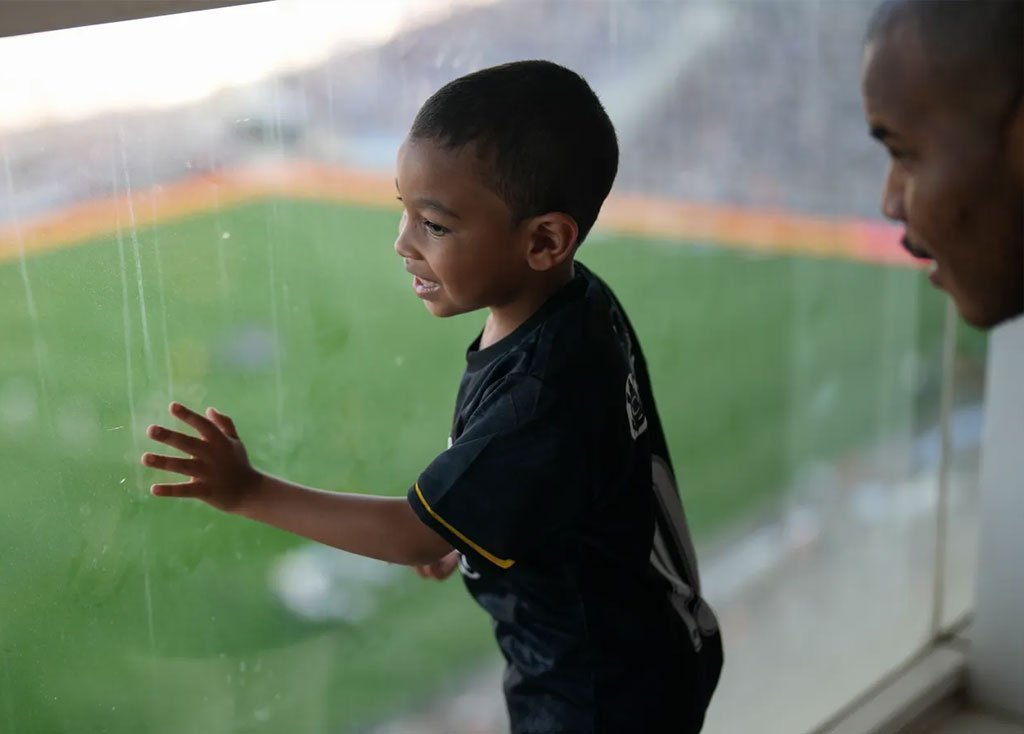
One of the most visible areas of progress has been in sports infrastructure. Major football stadiums have begun introducing sensory rooms—enclosed, sound-controlled environments that allow individuals with autism to engage with events while minimizing sensory distress. These spaces typically include reduced noise levels, controlled lighting, and clear visual access to the field. Clubs such as Corinthians and venues including Allianz Parque and Maracanã have implemented such accommodations, often in partnership with advocacy organizations and private sponsors.3 For many families, these rooms enable participation in public cultural life that would otherwise be inaccessible.
The concept underlying sensory rooms reflects a broader shift in disability policy: adapting environments rather than expecting individuals to conform to them. Sensory overload—caused by loud noise, dense crowds, and intense visual stimuli—is a well-documented barrier for many autistic individuals. By modifying these conditions, sensory rooms function as a form of environmental accessibility, aligning with principles of universal design and neurodiversity.
Policy developments are beginning to formalize these practices. In 2026, Brazil’s National Civil Aviation Agency (ANAC) introduced requirements for multisensory rooms in airports handling more than two million passengers annually, with implementation timelines extending through 2027.4 These spaces are expected to include adjustable lighting, acoustic control, and tactile elements designed to create a regulated sensory environment. This marks a shift from voluntary adoption to regulatory expectation, positioning sensory accommodations as part of national accessibility infrastructure.
Despite this progress, implementation remains uneven. Sensory rooms in stadiums and airports vary widely in design, staffing, and accessibility. Some offer fully equipped, professionally supported environments, while others provide more limited adaptations. Outside major cities, such accommodations are often absent altogether. This fragmentation highlights the absence of unified national standards governing sensory-friendly design across sectors.
Brazil’s multisensory room program passed its 2026 target early
Federal updates show the program moving from a 20 room target in late 2024 to 22 rooms in operation by February 2026.
Cultural context plays a significant role in shaping this movement. Football, as a central element of Brazilian public life, has provided a highly visible platform for inclusion. Sensory rooms in stadiums are not only functional spaces but symbolic ones, signaling that accessibility extends into shared national experiences. Families often describe these environments as enabling participation rather than segregation—allowing individuals with autism to engage with events on their own terms.
The expansion of sensory accommodations also raises broader policy questions. Will similar standards extend to schools, public transportation, and civic buildings? How will funding and enforcement mechanisms support implementation across regions with differing resources? And how will success be measured—not only in infrastructure, but in increased participation and quality of life?
Brazil’s trajectory suggests a model in formation. The country is moving from isolated innovation toward early-stage regulation, but has not yet reached a fully integrated national framework. For ASD policy observers, this transition highlights the role of public-private collaboration, cultural institutions, and regulatory agencies in shaping accessibility. It also underscores a broader shift in how disability is understood: not solely as an individual condition, but as an interaction between people and the environments they inhabit.
As these efforts evolve, Brazil may offer a model for scaling sensory-inclusive design in large, diverse countries—not by replicating clinical systems, but by rethinking how public spaces themselves can support neurological diversity.
1 World Health Organization, global autism prevalence estimates (approximately 1 in 100 children).
2 Brazil, Law No. 12.764/2012 (National Policy for the Protection of the Rights of Persons with Autism Spectrum Disorder).
3 Associated Press, reporting on sensory rooms in Brazilian football stadiums, including Corinthians and major venues.
4 Brazil National Civil Aviation Agency (ANAC), regulations requiring multisensory rooms in major airports (2026 policy guidance).


